
Ally Assist
Enhancing Therapy Support Through Better Handovers
Project Overview
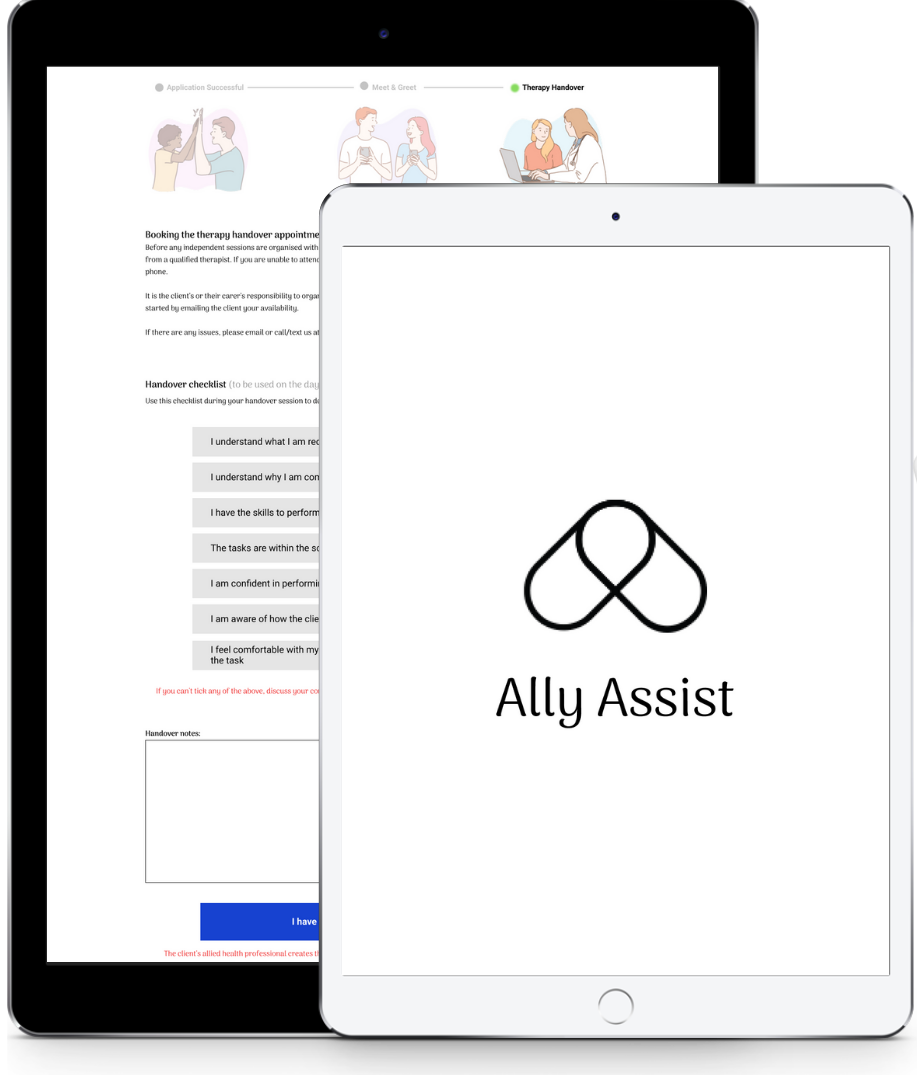
Ally Assist connects people with disabilities to therapy assistants, providing continuous support between clinical appointments. I transformed the critical handover process between Allied Health Professionals and Therapy Assistants into a streamlined, platform-integrated experience.
Design Lead responsible for:
Research synthesis and analysis
Persona and storyboard creation
Workshop facilitation
Prototype development (paper and high-fidelity)
User testing and iterations
Collaborated with Ally Assist's Customer Experience Officer for guidance and artefacts.
Problem Space
Challenge
The existing handover process between Therapy Assistants and Allied Health Professionals was conducted outside the platform, managed by clients' carers. This crucial step was often rushed or skipped, leaving Therapy Assistants uncertain about their responsibilities and lacking confidence in their care delivery.
Problem Statement
"Therapy Assistants need a structured way to build strong relationships with Allied Health Professionals to confidently perform their duties."
Research Process
Methodology
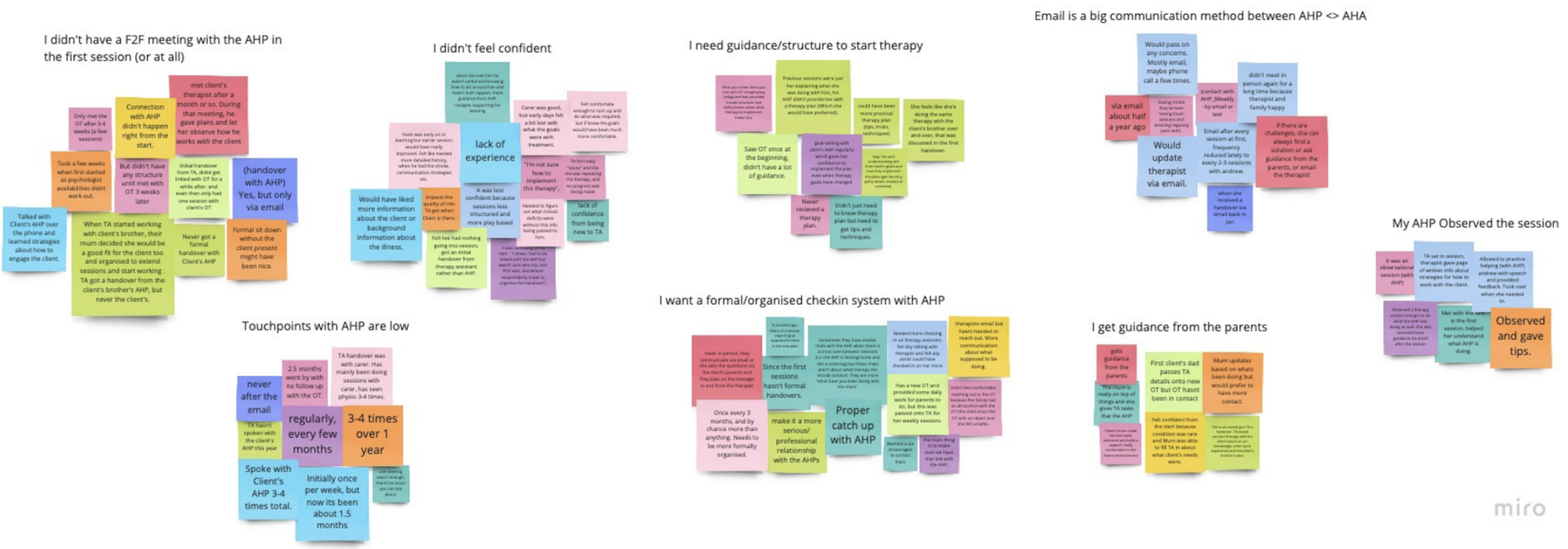
Conducted in-depth interviews with 15 Therapy Assistants to understand their challenges during the therapist interaction process.
Key Insights
Confidence Challenges
Therapy Assistants felt unprepared and uncertain at the start
Confidence improved with client rapport
Initial isolation in the process
Handover Issues
Strong preference for structured, face-to-face handovers
Information often relayed through parents instead of professionals
Lack of formal documentation
Professional Partnership Gaps
Need for structured check-ins with Allied Health Professionals
Desire for clear communication channels
Lack of formal support system
Solution Development
Design Process
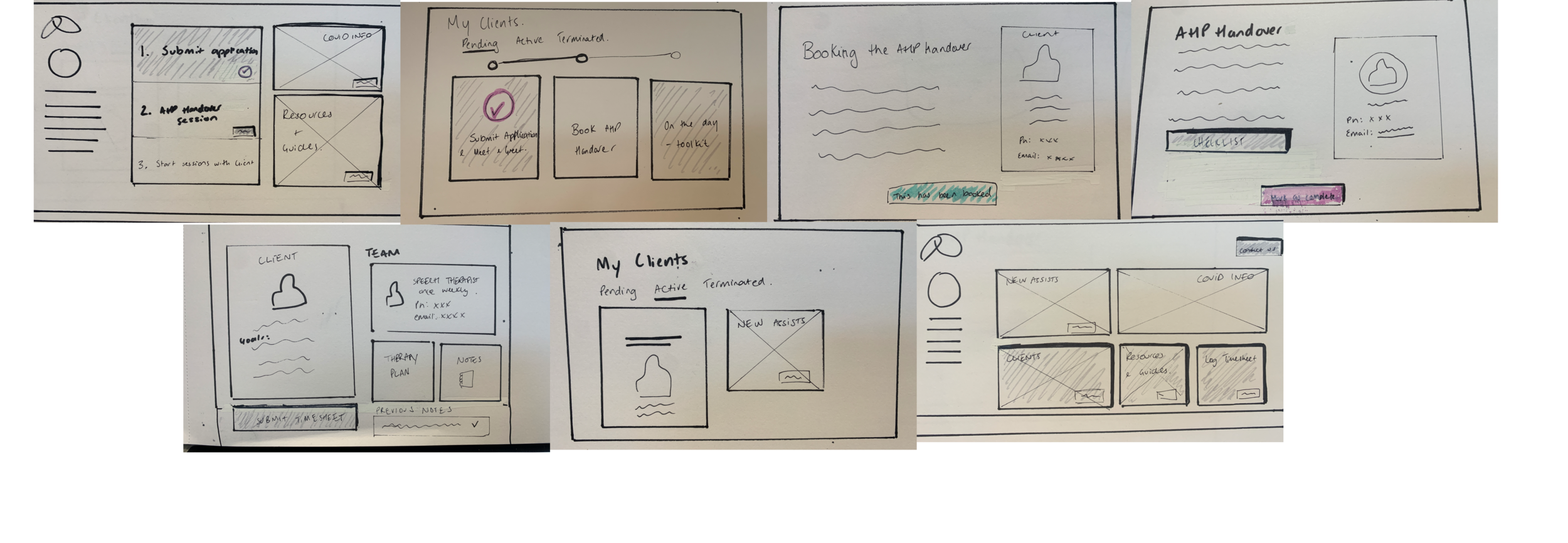
Paper Prototyping
Initial concepts tested with CEO and developer
Technical constraints identified:
Match existing workflow style
Consolidate handover stages
User Testing
Digital prototype tested with 5 users
Iterative improvements based on feedback
Design approach validated
Final Solution Features
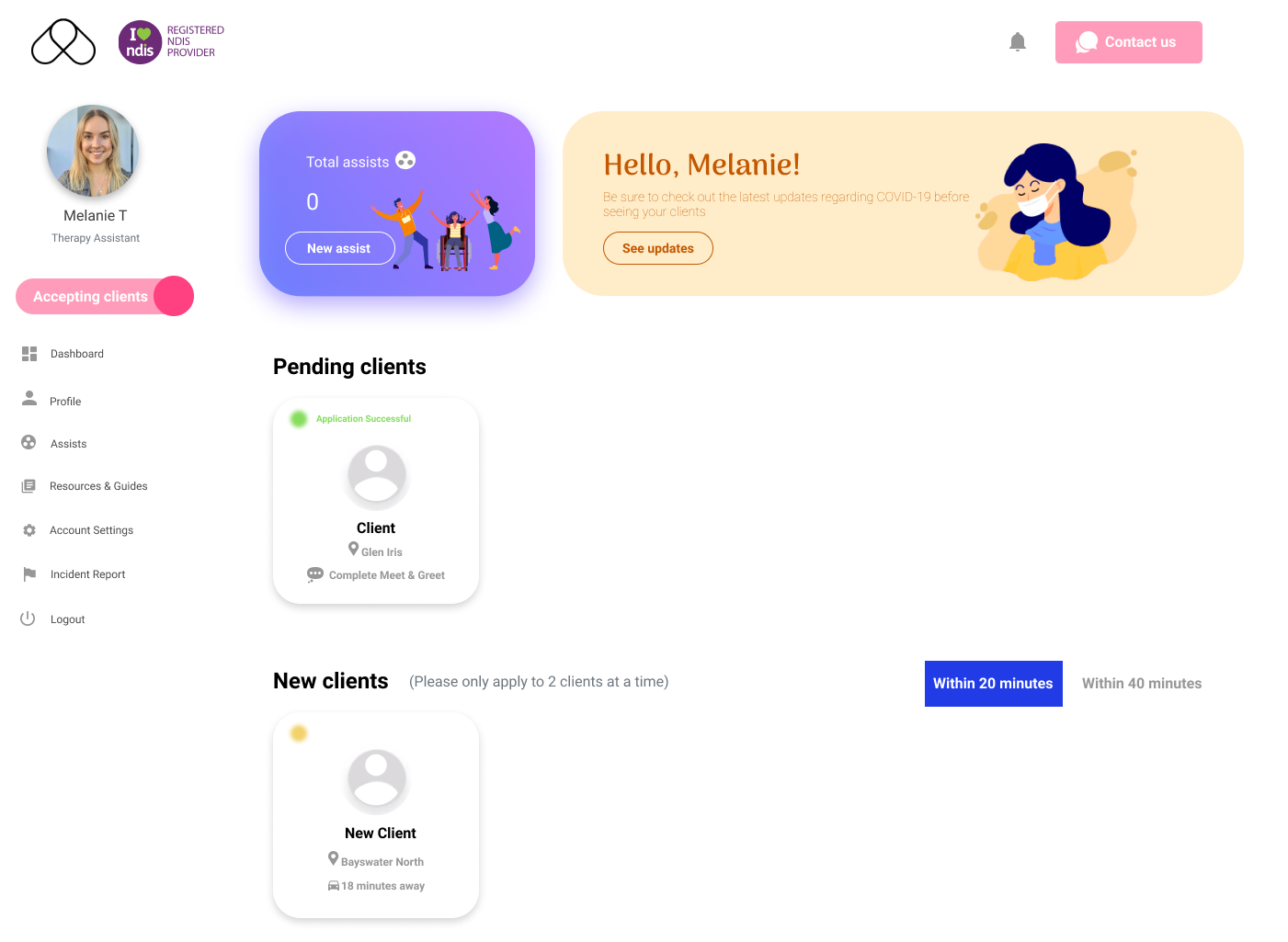
Enhanced Client Status Dashboard
Status-based client card organisation
Quick access to application status
Improved visibility of client details
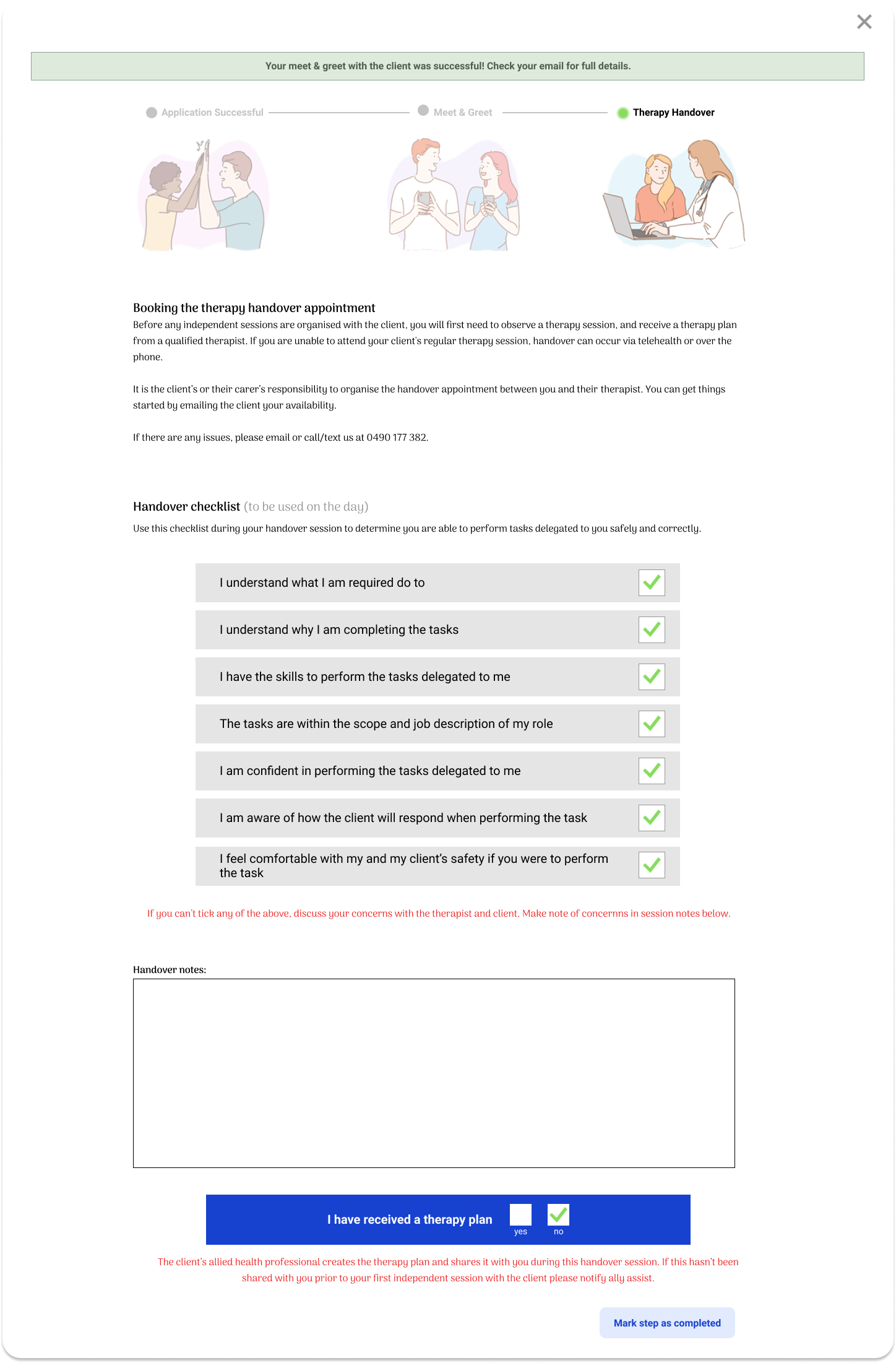
Structured Handover Process
Clear step-by-step instructions
Comprehensive handover checklist
Integrated documentation system
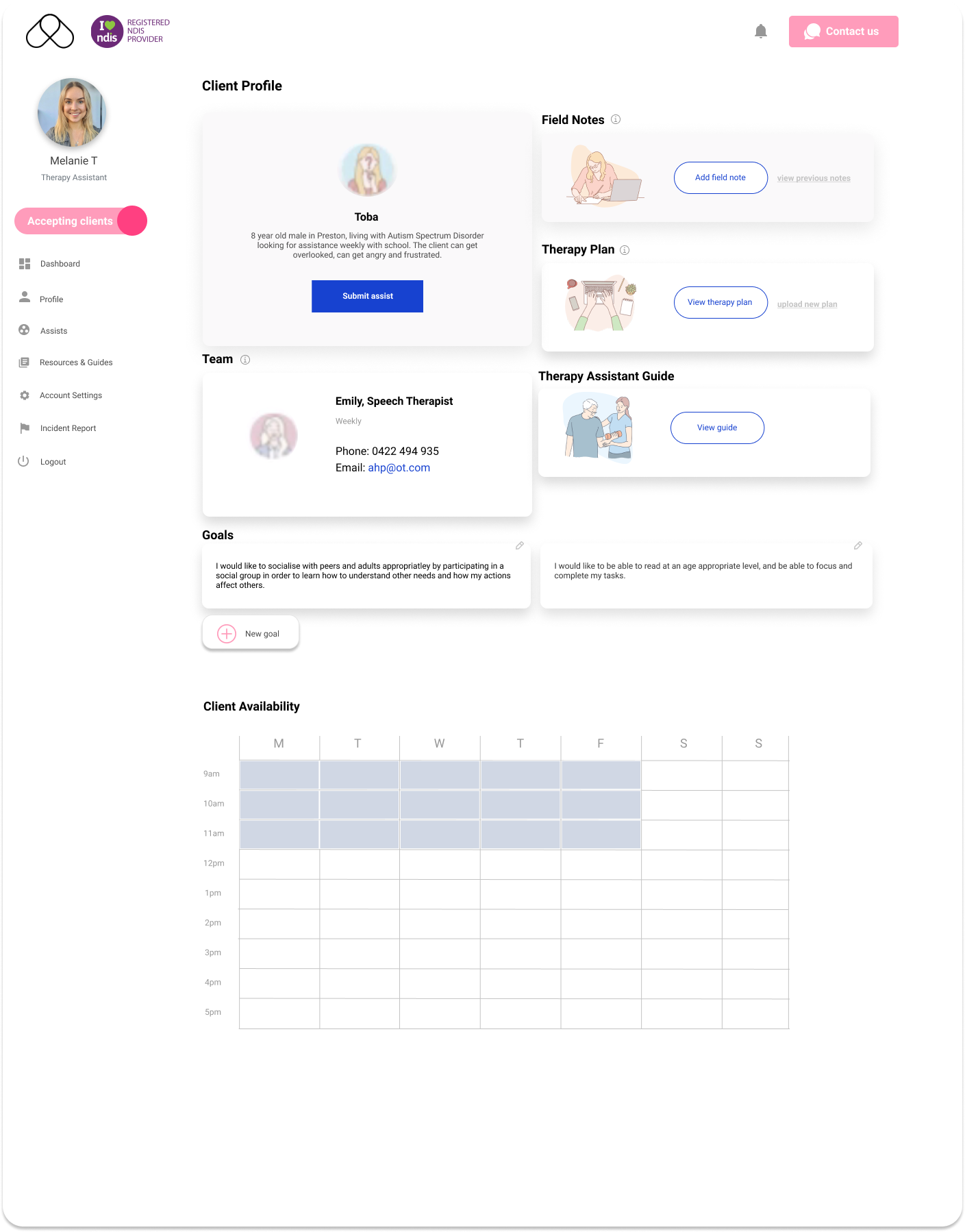
Comprehensive Client Dashboard
Field notes integration with timesheets
Personal client goal tracking
Quick access to essential documents and contacts
Impact
Learnings
Improved confidence levels among Therapy Assistants
Stronger professional relationships between stakeholders
Enhanced documentation and communication
Better utilisation of the platform's capabilities
Workshop Management
Importance of structured time management in collaborative sessions
Value of focused facilitation
Scope Management
Critical need to focus on MVP features
Importance of addressing core pain points first
Technical Integration
Benefits of early developer collaboration
Importance of understanding full platform capabilities before design